Strategy guide · Noughts & Crosses
Win more games with a quiet board.
Perfect play in Noughts & Crosses ends in a draw. That is useful news: if you spot every threat and choose the right square, you can always avoid losing—and punish the first mistake your opponent makes.
Every turn
Use this decision order
Before you look for a clever plan, scan the board in this order. It keeps urgent moves ahead of attractive ones.
- Win. If one of your marks completes a line, take it now.
- Block. Stop an opponent who has two marks in a line and an empty third square.
- Create a fork. Play a square that gives you two winning threats next turn.
- Block a fork. If your opponent can make two threats, remove that square or force a reply.
- Take the centre. It touches four lines and gives the most options.
- Take the opposite corner. When they occupy a corner, claim the corner across the centre.
- Take a corner. Corners build more useful lines than edges.
- Take an edge. An edge is the safe final choice when nothing above applies.
Build the shape
Strong openings, whichever side starts
Playing first: start in the centre for the widest set of replies. A corner is equally safe with perfect follow-up and makes forks easy to spot. Avoid opening on an edge unless you have a specific reason.
Playing second: if the centre is free, take it. If the first player takes the centre, choose a corner. If they take a corner, take the centre; if they take an edge, centre is still your best reply.
After your opening, keep counting lines rather than chasing a single row. The aim is to keep two possible wins alive while quietly removing theirs.
The turning point
Take the win before planning a fork
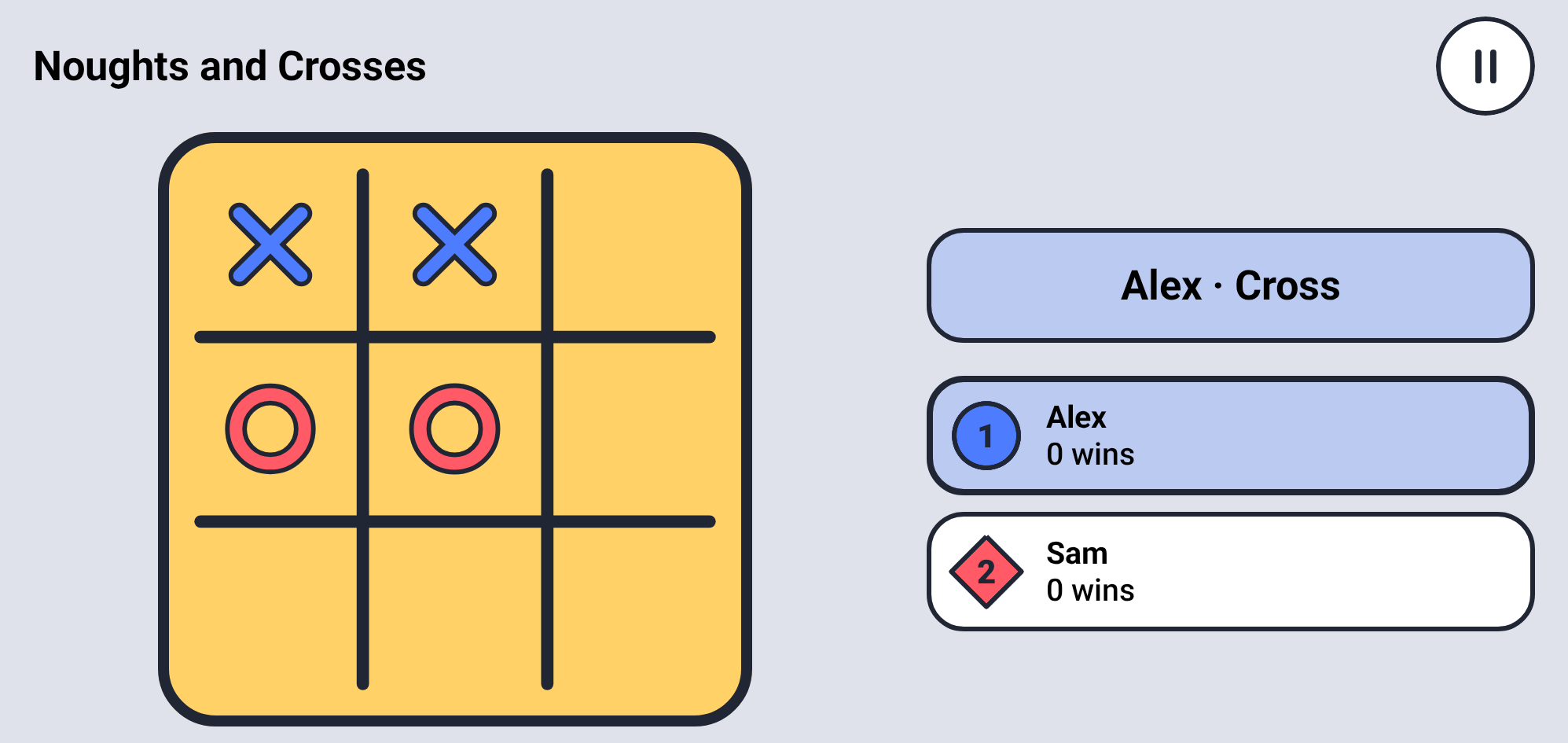
A fork is one move that creates two separate winning threats. Your opponent can block only one, so the next move wins. First take any immediate winning square; only plan a fork when no win is available.
Keep the draw
Common mistakes to leave behind
- Taking an edge first. It gives fewer lines and makes your reply predictable.
- Blocking the wrong line. Scan all eight lines; a diagonal is just as urgent as a row.
- Playing your own threat too early. Win or block first, then build the fork.
- Missing the double threat. After every opponent move, ask: “What two squares could win next?”
- Assuming a corner is automatically safe. Check whether it lets the other player fork through the centre.
Ready?
Practise the order, then play the board.
Whether you call it Noughts & Crosses or tic-tac-toe, the calm player wins the mistakes. Try a round, remember the checklist, and make your next move on the Noughts & Crosses mini page.
Play on Google Play